
Payment acceptance costs can add up for small businesses operating on thin margins. Dual pricing and cash discount programs are two pricing approaches merchants may consider to help manage these costs while giving customers options are checkout. Although they may sound similar, the two approaches differ in how prices are displayed and applied at the register. Here’s a quick breakdown of dual pricing vs cash discount programs, and why dual pricing is often the clearer choice for merchants and their customers.
Dual Pricing vs Cash Discount at a Glance
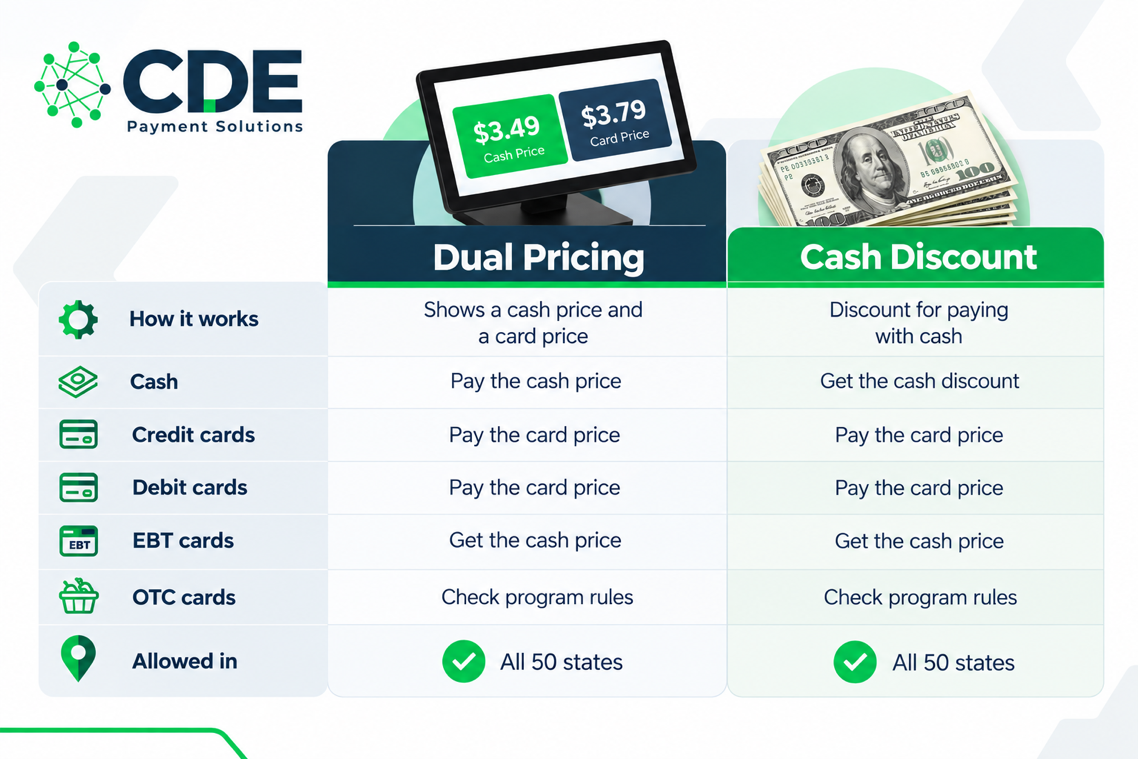
EBT Note: Under the SNAP Equal Treatment Rule, eligible foods bought with EBT / SNAP benefits must be sold at the same price as cash purchases, EBT / SNAP customers always get the cash price.
How the Program Works
What is Dual Pricing?
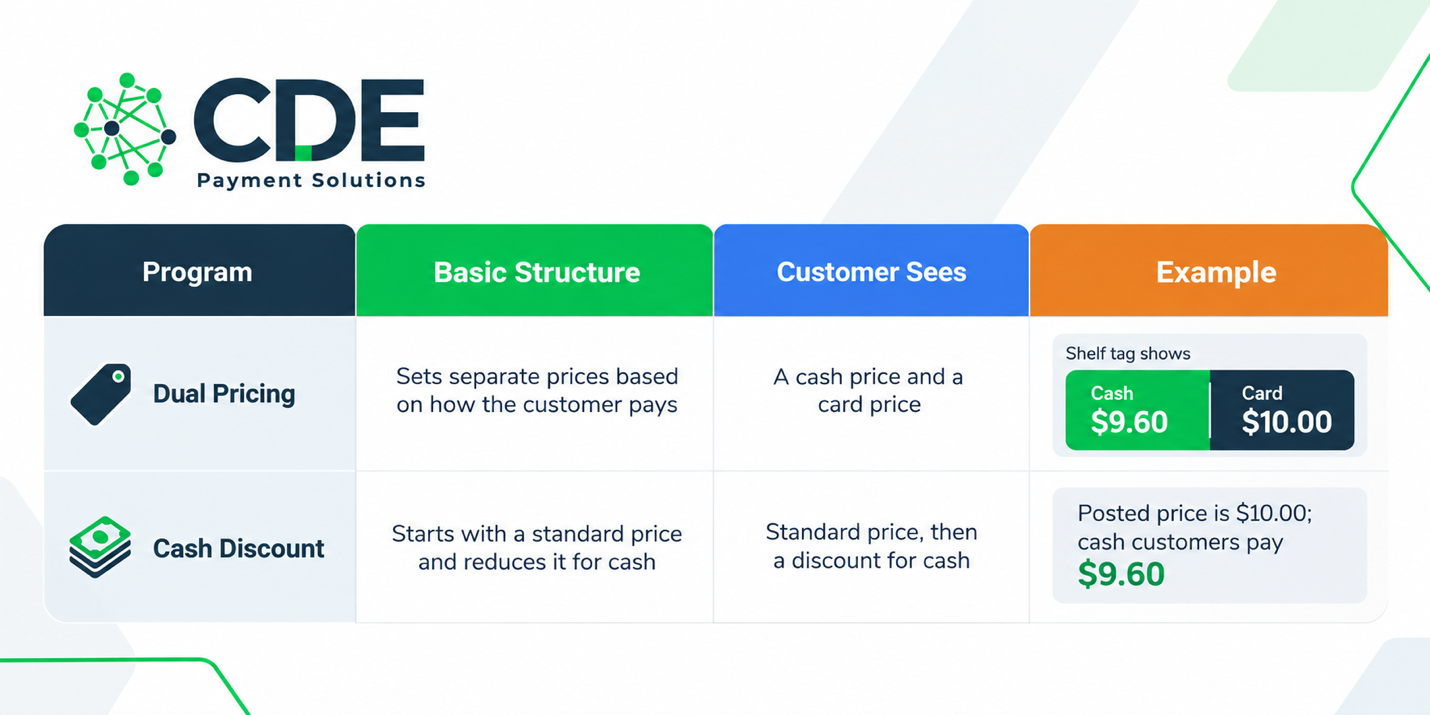
Dual pricing shows both prices on every item, such as “Cash $9.60 / Card $10.00.” Customers see exactly what they will pay before they reach the register, which makes it one of the most transparent options available. It is currently legal in all 50 states.
Because both prices are posted up front, and nothing is added at the register, dual pricing is not a surcharge. That means surcharging requirements, like card brand caps, 30 days of advance notice, and restrictions on debit cards, do not apply. Credit and debit customers pay the posted card price, and cash customers pay the posted cash price.
The main trade-off is setup. Shelf tags, menu boards, and your terminal all need to show and charge the right price for each payment type. That is where CDE comes in. Our team helps merchants set up dual pricing the right way, so your pricing stays clear and compliant from day one.
Ready to learn more? Contact the CDE team at 800.921.1271 or visit our dual pricing page for more information.
What is a Cash Discount Program?
With a cash discount, your posted price is the regular price that card customers pay, and cash customers get a discount at checkout. Federal law, including the Truth in Lending Act and the Durbin Amendment, protects a merchant’s right to offer discounts for cash, so cash discount programs are allowed in all 50 states.
The key is that a true discount takes money off the posted price. Programs that post a lower price and then add a “non-cash adjustment” fee to card sales can run afoul of card brand rules. Trade publication The Green Sheet reports that Visa treats that kind of add-on as a rules violation. Dual pricing avoids this confusion, because both prices are posted for every item and customers never see a charge added at checkout.
Signage Rules for Each Program
Both programs require clear disclosure, so customers know what they will pay before checkout.
- Dual Pricing: Show both the cash price and the card price on shelf tags, menu boards, and price displays, so customers see them before checkout. Receipts should show the price the customer actually paid.
- Cash Discount: Post signs letting customers know a discount is available for paying with cash. Federal law requires the discount to be offered to all customers and disclosed clearly and conspicuously.
Some states have their own pricing disclosure rules. In New York, for example, merchants can show both the cash and card price or post the card price and advertise a discount for cash, but they cannot advertise that all prices include a cash discount that does not apply to card purchases. Check your state’s rules before you print and sign.
Why Dual Pricing Is the Clearer Choice
Dual pricing and cash discount programs are both available in all 50 states, and both give customers a lower price when they pay with cash. The difference is transparency. With dual pricing, customers see both prices on every item before they reach the register, so there are no surprises at checkout, and your pricing is easy to explain to customers and staff. When comparing dual pricing vs cash discount, dual pricing puts the choice clearly in your customer’s hands.
Get Started with Dual Pricing From CDE
CDE offers dual pricing to small businesses nationwide, and our team will help you get set up the right way, from programming your terminal to making sure both prices are displayed clearly. Call our sales team at 800.921.1271 or visit our dual pricing page to learn more.
This article is for general information only and is not legal advice. Card brand rules and state laws change often, so confirm current requirements with your processor before launching a pricing program.